


Termites, often called “silent destroyers,” can cause massive damage to your home without you even realizing it. Australia, particularly in Sydney, is termite hotspot, making knowing the early warning signs crucial. Don’t let these pests compromise your property’s structural integrity and value. Seeing these signs at home? Book a termite inspection in Campbelltown.
Termites are a severe issue for households all across Sydney because they are present in every Sydney suburb. Every home should take precautions and seek out routine termite inspections, as it is a warning. An estimated 130,000 to 180,00 Australian dwellings per year, or one of every five residences, are infested and damaged by termites. You may save money by securing your home before seeing any termite damage.
Damage from termites feeding within your home might cost you hundreds of dollars. Unfortunately, homeowners insurance rarely provides coverage for this kind of damage.
It might seem unlikely that termites could wreak that much damage if you’ve only ever seen one. They are little, after all, typically only measuring between 0.5 and 1.5 millimetres in length. However, termites are rarely independent. Instead, a solitary termite often indicates the presence of a neighbouring colony with thousands of more termites. So, while a single termite may not do much harm, several termites can harm the foundations of buildings.

A termite infestation occurs when a termite colony establishes itself within or near your home. Termites are social insects that live in highly organized colonies with distinct roles assigned to different members:
Termite colonies can range in size, sometimes containing millions of individuals. Each colony member contributes to the destruction they can cause. Because termites tend to work out of sight within walls or underground, a well-established infestation can go undetected for a significant period.
What are the signs of a termite infestation?
If termites aren’t dealt with immediately, they could cause damage and cost you money. They can harm your home’s structural stability if not dealt with.
By regularly checking your house or property for termite indicators and keeping an annual termite inspection as part of a reliable company’s termite protection plan, you can be proactive about preventing termite damage.
Look for uneven or sagging floors, indicating termite activity beneath the surface.

Tap on walls, baseboards, and door frames. If they sound hollow, termites may have eaten away the wood from the inside.

Swarms of winged termites signal a potential infestation.

Flying termites, known as alates, split off from their colony to find mates and establish a new colony. A swarm of flying termites might number hundreds or even thousands and occurs at specific times of the year. It is a sign that termites may have been present in the area for a long time if you see a swarm of flying termites on or near your property.
Piles of discarded wings near windows or doors mean termites have tried establishing a new colony nearby.
Termite wings left behind can be discovered close to closed windows, doors, and other home entry sites. Termites leave their nest in swarms to mate and look for a location to establish a new colony. They fly in the direction of the windows, drawn by the light from outside. Termites purposefully break off their wings as they touch down since they won’t use them again.
These wasted wings may be found stacked in heaps. The termites are not necessarily dead just because they have lost their wings. Instead, they might be occupied trying to establish a new colony nearby.

Termites can cause wood to warp, making it difficult to open or close.
The termites harm the wood by chewing into it in search of cellulose, causing it to bend or buckle. Due to this damage, you may find it challenging to open and close your doors and windows. Doors and windows that won’t fully close and stick could be early indicators of a termite infestation.
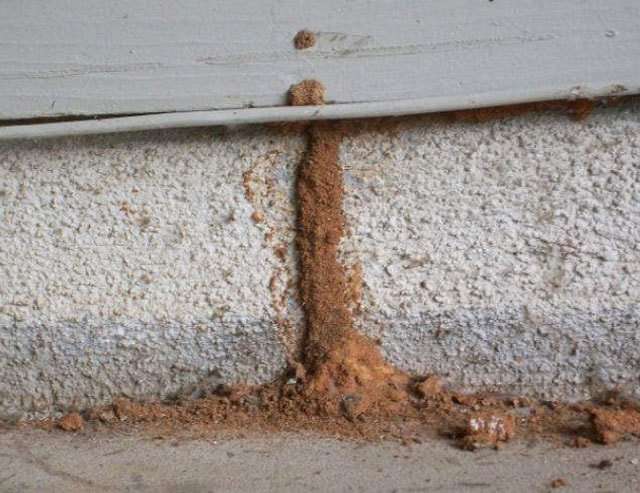
Subterranean termites build these pencil-sized tunnels to travel between their nest and food sources.
When termites have infiltrated a structure, pencil-sized mud tubes can be found anywhere the earth meets your home or any other potential food source, such as a tree or shed. This is due to subterranean termites’ subsurface nests and the fact that they frequently eat home structures as a food source. To survive, these termites need a specific range of temperatures and humidity. Their tunnels obstruct cool, dry air, transforming your home into a favourable environment for them.
If you see mud tubes like the below, contact a professional OCG technician immediately!
Small, wood-colored pellets are a major sign of drywood termites.
Inwood, Drywood termites build their nests. They make galleries by digging and consuming the wood they infest. They make kick-out holes where they dispose of their waste to maintain these galleries clean. Because drywood termites consume wood, their waste is also made of wood, and when they push it out of their nest, it can build little pellet mounds on floors or window sills. These pellet mounds resemble sawdust or coffee grounds and could be signs of drywood termites.

Keep an eye out for live termites when tearing down walls or working with wood.
Watch out for termites in the wood you’re ripping away when remodelling your home. Renovations or remodelling projects are one of the most typical ways termites are discovered in homes. When tearing down cabinets or walls, homeowners may be dismayed to discover living termites. They can be found anywhere on your property, feeding on organic materials that include cellulose, such as tree stumps and firewood stacks. They can also be found in the soil around your home, in rotting or moist wood parts of your structure.

Pin-sized holes, bubbling paint or wallpaper indicate termite damage.

Paper is a component of drywall, including cellulose, the main food source for termites. Termites will leave behind tiny trails as they eat on drywall’s exterior and interior. You can find pin-sized holes where the termites have eaten their way through your drywall or wallpaper. The appearance of bubbling beneath your wallpaper or paint and termite pinholes in the drywall, which is covered with a speck of dirt, are apparent signs that termites are present.

Termites thrive in damp environments, which can lead to a moldy smell.
Termites like wood that is exposed to high moisture levels typically smell mouldy. It is worthwhile to contact a specialist for a termite examination if you smell mould but can’t locate the source.
Advanced infestations can cause ceilings to sag and support beams to weaken.
A termite infestation can harm your building’s structural components. Support beams can buckle due to termites eating through them, jeopardising the stability of your house. For instance, termite-damaged support beams can cause floorboards to buckle and ceilings to dip and break. Wood can deteriorate as a result of their constant tunnelling. Repairing these problems can be highly expensive and complicated.
Termite damage to the subfloor can make floors squeak and tiles come loose.
Tiles may become loose when termites devour your flooring or subflooring. Wooden floorboards with termite damage can bow and blister, making greater noise when you walk on them and putting pressure on the affected regions.

What does a termite infestation look like?
An infestation of termites can have a variety of appearances depending on the species you’re dealing with. The telltale indicators of a termite infestation include mushy or hollow-sounding wood, blistering floors, and mud tubes (miniature holes in the wood that termites plug with mud).
A termite colony comprises a queen, workers, soldiers, and additional reproductive termites, but you might not recognise it. A termite’s life cycle can span between two and fifty years, and a termite colony can endure indefinitely depending on each termite’s species and social standing. Over a million termite individuals can make up a colony, and they will all gnaw hungrily on any wood they come into contact with.
The speed of termite damage depends on the colony size and species. However, with their constant hunger, a large colony can cause significant structural damage within months.
How do I treat a termite infestation?
While it’s crucial to act quickly to eradicate a termite infestation, it’s also crucial to apply the right types of treatments both inside and outside your home. Because different termite species behave differently, your treatment plan should be tailored to the type you’re trying to eradicate. The incorrect DIY or over-the-counter termite remedies can frequently be harmful and ineffectual. The best line of action is to contact a termite control expert who can analyse your issue and suggest the best course of action.
OCG finds signs of termites
Your home needs protection because termites cost billions of dollars in property damage yearly. Fortunately, our termite control specialists are fully aware of where to search for termite indications and will create a plan tailored to your requirements. That’s where OCG comes in. We have 10+ years of experience in dealing with these household pests. Even the worst termite infestations can be found and helped to eradicate, thanks to the expertise of our pest and termite treatment specialists.
Click the button below to arrange your free inspection and ensure your house is termite-free. One of our termite control experts will visit your home to inspect around and speak with you about the termite issue. Your termite control specialist will next collaborate with you to create a specialised treatment plan that is intended to eliminate your termite problem and defend your house against these destructive pests.
Don’t let termites take over your home. OCG Pest Control specialises in termite detection, eradication, and prevention. Schedule your free inspection today!
Seen any of these signs at your place?
Do not disturb the area. Book a licensed termite inspection to AS 3660.2-2017 and get a formal written report with photos and clear next steps.
Book a termite inspection


